Monday, March 11, 2013

The Perils and Payoffs of Celebrity Status

Hey, did you hear the one about the aspiring actress who moved to Hollywood? She was so dumb, she slept with the writers.

 * * * 

Admittedly, it’s an old and tired joke. But with this April’s edition of the American Sociological Review, it’s acquired new edge. A research team at Columbia University’s Mailman School of Public Health has compared the longevity of Emmy-winning screenwriters with their not-so-high-falutin’ peers, and they've done the same for baseball Hall of Fame inductees, Emmy-winning actors, and former Presidents and Vice Presidents of the United States. Professor of Sociomedical Sciences Bruce Link and his crew pursued this line of inquiry because modern research has fairly shown a strong correlation between socioeconomic status and long life. They wanted to get specific about the why and when of any correlation.

The team found that the joke really is on screenwriters. On average, Emmy-winning screenwriters die 3 years earlier than their competing peers. This is as compared to Emmy-winning actors, . . .

Read the entire post on Psychology Today.

Sunday, October 07, 2012

Wound-Healing Bandage, Male Ornamentation, Novelty Seeking in Bees

NEW BLOOD VESSELS FOR OLD. Any kind of tissue that can be wounded has blood vessels. One of the challenges in medicine is recreating or redirecting intricate vascular networks, sometimes from scratch. This January a bimolecular engineer and a computer engineer at the University of Illinois at Champaign-Urbana together announced the development of a bandage that "stamps" the desired pattern of blood vessels onto skin, muscle, or bone. The bandage contains living cells that deliver growth factors in a defined pattern. According to the report in Advanced Materials, within a week the pattern of the stamp takes the form of newly generated blood vessels.

STAG WALKS INTO A BAR. Ever wonder why some male animals have bigger horns or other sexual ornamentation than others of their species? Working with rhinocerous beetles, zoologists led by a researcher at Montana State University demonstrated that male animals’ ornaments are insulin-dependent. According to a study published in  August 2012 issue of Science, growth to gargantuan size reflects excellent nutritional status in any male showing them off. If so, obviously “hunky” male animals are also probably strong and have good endurance. It’s probably an attractive quality to females hoping to mate.

BORN TO BE WILD. Every motorcycle movie ever made suggests that some humans are more adventuresome than others. Apparently, it's true of honey bees, as well. Some consistently “take it on the road” to new territory. According to a March 2012 study in Science, there are massive genetic differences that set territorially bold honeybees apart from their fellows. At least a few relate to the molecular pathways implicated in novelty-seeking in humans.

Sea Power, Autism, Ants, Clades, and Nuclear Waste

1—A BETTER SEA POWER TRAP. Wave Energy Converters (WECs) harvest the energy of ocean waves, and represent an enormous potential in the creation of usable alternative energy. But the utility of WECs is hampered by the unpredictability of waves—and by their occasional surprising violence, which can destroy WECs altogether. According to a study recently published in the journal Renewable Energy, a team of scientists at Tel Aviv University and at the University of Exeter have developed an algorithm that, when programmed into a control unit, can give WECs a one-second warning about wave height and force. This allows a WEC to react to each wave individually, collecting energy efficiently and surviving even the roughest assaults. In the lab, the new prediction algorithm improved wave energy collection by 100%, doubling the amount of energy collected. (Renewable Energy is not available online.)

2—HOGWASH TREATMENTS FOR AUTISM? The prevalence of autism is on the rise. But according to Vanderbilt University researchers reporting on August 27 in Pediatrics, every one of the interventions currently used for the growing numbers of adolescents and young children needing substantial support are based on insufficient evidence. The researchers examined 32 studies addressing medical, vocational, and behavioral interventions, and deemed all of them structurally flawed. In light of the current autism “epidemic,” the researchers have concluded that that more rigorous studies about care for adolescents and children with autism are urgently needed.

3—TALKING THROUGH THEIR NOSES. By creating a full map of the olfactory system of worker ants of two distinct species, a research team at Vanderbilt University has come to a new understanding of ant gender roles and ant communication. The map shows that females of the two species each have about 400 distinct odorant receptors. This is four to five times more than most other insects have, and about three times more than male ants of the species studied have. Reporting in the August 2012 issue of PLoS Genetics, the VU scientists speculate that smell is the probable fundament of ant communication. Chemical signals setting off specific odorant sensors would explain how ants live in a complex social system characterized by division of labor and the ability to collaboratively solve complex problems. The researchers suggest a reason that male ants have fewer odorant receptors than females. They are only responsible for fertilizing eggs. Females, it seems organize and do just about everything else.

4—STUMPING DARWIN. A “clade” is a group consisting of a species and all of the many species descendant from it. Given the glacial pace of evolutionary change, one of the most fundamental expectations in evolutionary studies is that species richness in a clade is a measure of its age. Now that central assumption has been thrown into question. Publishing this August in PLoS Biology, evolutionary biologists from UC Berkeley, the University of Michigan, and UCLA report testing the relationship between clade age and species richness across nearly 1400 major clades of multicellular fungi, plants, arthropods, and vertebrates that collectively account for more than 1.2 million species. The team found no evidence whatsoever between clade age and species richness. “This result appears to hold across the entire tree of life, for taxa as diverse as ferns, fungi, and flies,” the scientists report.

5—SOLVING THE NUCLEAR WASTE PROBLEM WHILE PRODUCING EXTRA ENERGY. Physicists at the University of Texas at Austin have been awarded a U.S. patent for a fusion-fission hybrid nuclear reactor that could someday be used to turn nuclear sludge into usable energy. Parts of the device are still in the conceptual phase. But a “tokamak,” which uses magnetic fields to confine super-high temperature nuclear waste and produce fusion reactions, has been manufactured and is being installed in the UK at Culham Centre for Fusion Energy. CCFE, just south of Oxford, is the UK’s national laboratory for fusion research.

Thursday, September 13, 2012

This Week at Psychology Today: Would Jeffrey Dahmer Have Been a Good World Leader?

A new study correlates psychopathic traits with effectiveness in American presidents.
Certain legendary presidents—Theodore Roosevelt, John F. Kennedy, and Franklin D. Roosevelt among them—had the fearless dominance of psychopaths. Presidents whom history remembers as relatively ineffective—Jimmy Carter and Woodrow Wilson, perhaps—had considerably less of that Right Stuff. So say the authors of a study published in this September’s issue of The Journal of Personality and Social Psychology. The team led by Emory University psychologist Scott Lilienfeld points out that, although psychopathology is a huge risk factor for criminality and violence, certain psychopathic traits are tied to success in politics. Read more at Psychology Today.

Wednesday, August 29, 2012

This Week at Psychology Today: Senator Stacey Campfield Out-Does Congressman Todd Akin

Why did the Tennessee senator get his facts on HIV/AIDS so hysterically wrong?


It’s old news, perhaps. Sorry to arrive on the scene late. But in January of this year the Huffington Post reported some troubling quotes of Stacey Campfield, a Republican in the Tennessee Senate. He is the sponsor of that state’s “Don’t Say Gay” bill, which prohibits schools from discussing with students any sexual orientation other than heterosexual. According to HuffPo, on a radio show hosted by gay activist Michelangelo Signorile, Campfield said:

"Most people realize that AIDS came from the homosexual community — it was one guy screwing a monkey, if I recall correctly, and then having sex with men. It was an airline pilot, if I recall."

"My understanding is that it is virtually — not completely, but virtually — impossible to contract AIDS through heterosexual sex...very rarely [transmitted]."

"What's the average lifespan of a homosexual? It's very short. Google it yourself."

Since last week when Missouri’s Republican Congressman Todd Akin said, “If it's a legitimate rape, the female body has ways to try to shut that whole thing [sperm fertilizing egg] down,” the country has grown another skin on its ever-hardening nub of understanding that politicians occasionally get their science wrong. But that’s no reason not to set the record straight. So, for the record, AIDS is only one of about 80 infectious diseases that humans are capable of acquiring from animals....

Read more at Psychology Today.

This Week at Psychology Today: Congressman Akin, Meet Genghis Khan and Your Evolutionary Ancestors

The DNA of 8% of men in the former Mongol empire prove Akin wrong.


"If it's a legitimate rape, the female body has ways to try to shut that whole thing [impregnation] down,” Congressman Todd Akin, the Republican nominee in Missouri for U.S. Senate famously said this week.
Yeah? Well tell that to Genghis Khan.

And tell it to the chimps.

According to 2003 research by geneticists and biologists at universities across Europe and Asia, approximately 8% of the men now living in areas of Asia once occupied by Genghis Khan’s army are direct descendants of the legendary conqueror. This is roughly the equivalent of 0.5% of the world’s total population of adult men.

Testing the blood of 2,123 living men, researchers from the UK’s Oxford University, China’s Harbin Medical University, Italy’s University of Ferrara, ...

Friday, August 24, 2012

5000 Years of Air Pollution

Like politics, all epochs are local.

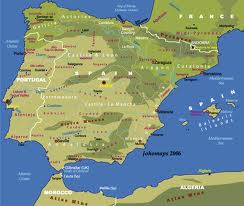
Iberia, a peninsula on Europe's southwestern reaches, has long been known as a prehistoric mining center, with metal resources that continue to be harvested. As reported in The Journal of Archaeological Science (corrected proof available online July 23, 2012) researchers from Spain and the UK have examined three Iberian wetlands for clues about human metal use over the ages.

These peat bogs were not themselves mines. Nor were they necessarily ever sites of metal use by humans. Still, in the peat is a record of metal use over the ages. The data are in the trace minerals present in the soil because they precipitated with rain out of polluted skies.

The metal use timeline that the researchers have constructed for Iberia coincides with much of what's known about the Stone Age, the Bronze Age, Celtic and Roman culture, and the industrial revolution both locally and globally. Uninhabited and even never-inhabited areas, it seems, can be an ongoing resource for investigations of early mining and metallurgy practices, and, hence, early culture.